Pink is a perfectly nice color. Just not when it shows up as a ring inside the toilet.
Or along the bottom of the shower curtain. Or around the drain.
Most people call it pink mold, which is a reasonable guess. It appears in damp places, and even after you clean it away, it has a habit of coming back.
But it usually isn’t mold. It’s bacteria.
The most common culprit is a bacterium called Serratia marcescens. It’s found naturally in soil, dust, and the air around us. It produces a pinkish-red pigment, and when enough bacteria collect on a surface, that color becomes visible.
It doesn’t mean there’s something wrong with your water. The bacteria generally come from the surrounding environment, not from properly treated drinking water.
So why does pink keep showing up in bathrooms?
Because bathrooms offer just about everything these bacteria need: warmth, moisture, and the residue left behind by soap and shampoo. Even the products we use to get clean can contribute to the conditions that allow bacteria to grow. It’s one of the reasons bathrooms get dirty in the first place.
Here’s something I didn’t expect: sometimes the pinkest bathroom is the one nobody uses.
Chlorine in treated tap water helps keep bacteria under control. But when water sits for long periods, the chlorine gradually dissipates. That gives bacteria an opportunity to grow. It’s why the guest bathroom toilet, the one that hardly ever gets flushed, can develop a pink ring even though nobody’s been using it.
The good news is that the pink film is generally easy to remove. The less encouraging news is that the bacteria are everywhere, so there’s no way to banish them permanently. Regular cleaning, removing soap residue, and allowing surfaces to dry are the best ways to keep the pink from returning.
For most healthy people, it’s more of a housekeeping nuisance than a health concern. Serratia can cause infections, particularly in people with weakened immune systems, so it’s still worth taking care of.
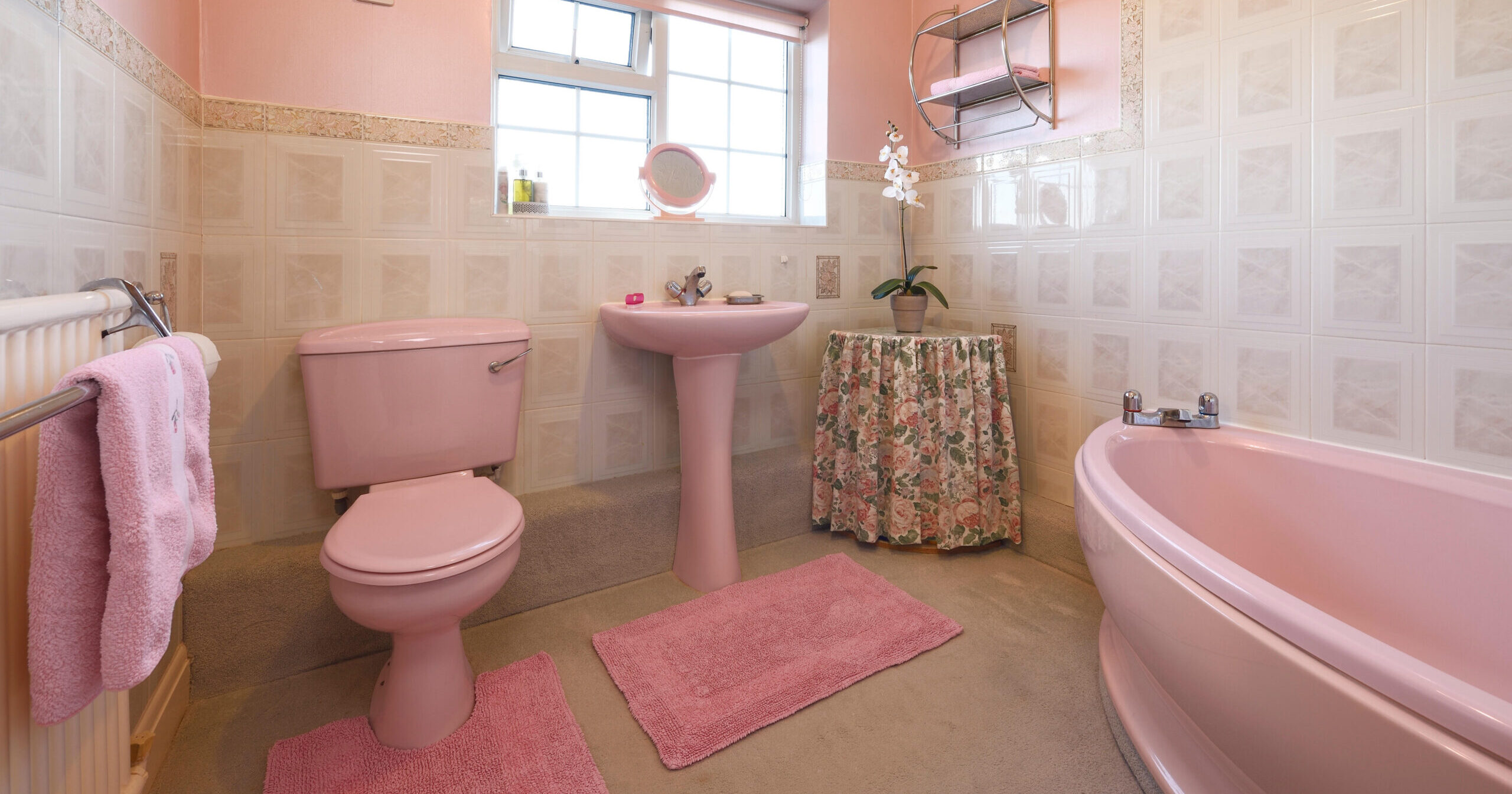
I came across a piece of advice that made me laugh: short of buying pink fixtures, keep cleaning it.
Which reminded me of something else: why we chose white toilets in the first place.
White shows us what’s there.
The pink ring isn’t the toilet failing. It’s the white doing its job.