What Does “Sanitary” Actually Mean?
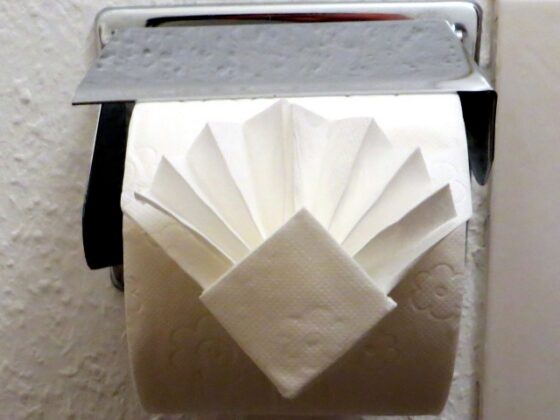
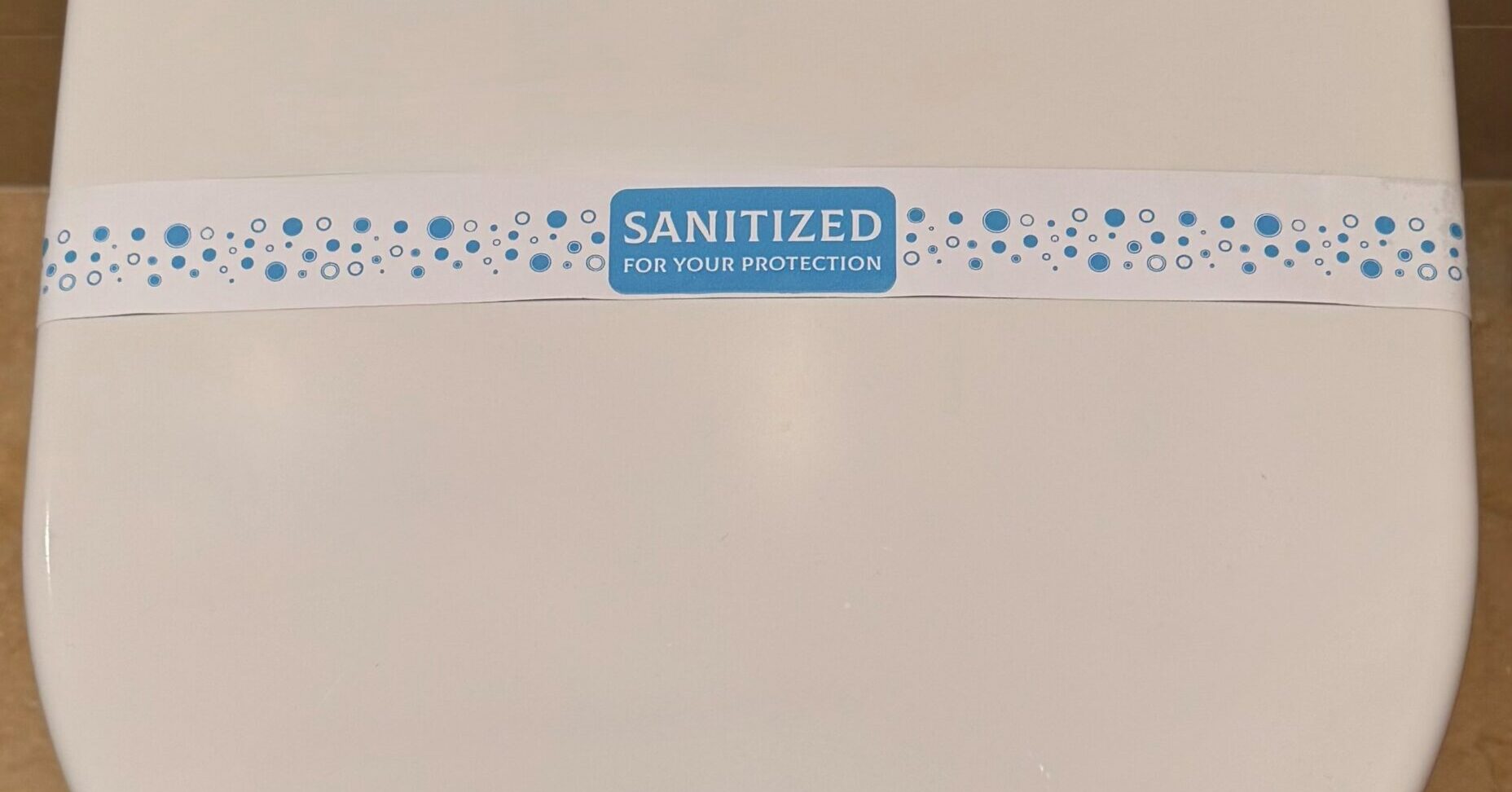
You’ve probably seen the paper band stretched across a motel toilet seat: “Sanitized for your protection.”
It’s a pretty big promise for a strip of paper. Not cleaned. Not wiped down. Sanitized. And not merely sanitized, but for your protection. That word is doing a lot of work.
“Sanitary” sounds almost medical. Cleaner than clean. Safer somehow. Put it on a bathroom, a kitchen or a cleaning product and it feels as though something specific has happened, even if most of us couldn’t tell you exactly what.
The word itself goes back to the Latin sanitas, meaning health. And when people talked about sanitary reform in the 19th century, they were talking about things like sewage, waste and clean water, not whether the sink had been wiped.
That’s a long way for a word to travel, and somewhere along the way, sanitary became one of those words that tells us how we’re supposed to feel about a place. A sanitary bathroom. A sanitary kitchen. A sanitary surface. You can picture all three: clean, orderly, nothing sticky, nothing suspicious growing in the corner.
But sanitary and sanitized aren’t quite the same thing.
The EPA has generally treated “sanitary” as implying a state of cleanliness. Once a product starts claiming that it kills or reduces germs, though, the rules get much more specific. A bottle that says it sanitizes has to prove it before it’s allowed to say so.
Which brings me back to that strip across the toilet.
The paper band doesn’t tell you what product was used, what germs that product was meant to reduce, whether it was mixed correctly or whether the surface stayed wet long enough for it to work. It doesn’t even tell you what the person who put the band there meant by “sanitized.” What it does tell you is that housekeeping has been there and, presumably, nobody has lifted the lid since.
And somehow that’s enough. We see the word and understand the message: this bathroom is ready for you.
That’s a lot of responsibility for one word. I don’t think most of us hear sanitary and think simply clean. We hear safe. We hear germ-free. We hear someone took care of this. The word does a little extra work in our heads.
Cleaning, sanitizing and disinfecting are actually different jobs, even though we blur them together all the time. A surface can be clean without being sanitized, and plenty of clean surfaces never need disinfecting at all. But sanitary can float comfortably somewhere in the middle, borrowing a little authority from both cleanliness and health.
Nearly two hundred years ago, sanitary reform was about sewage and drinking water. Now the same family of words can end up on a toilet-seat band.
It still sounds like health.
Sometimes it just means somebody cleaned the bowl.