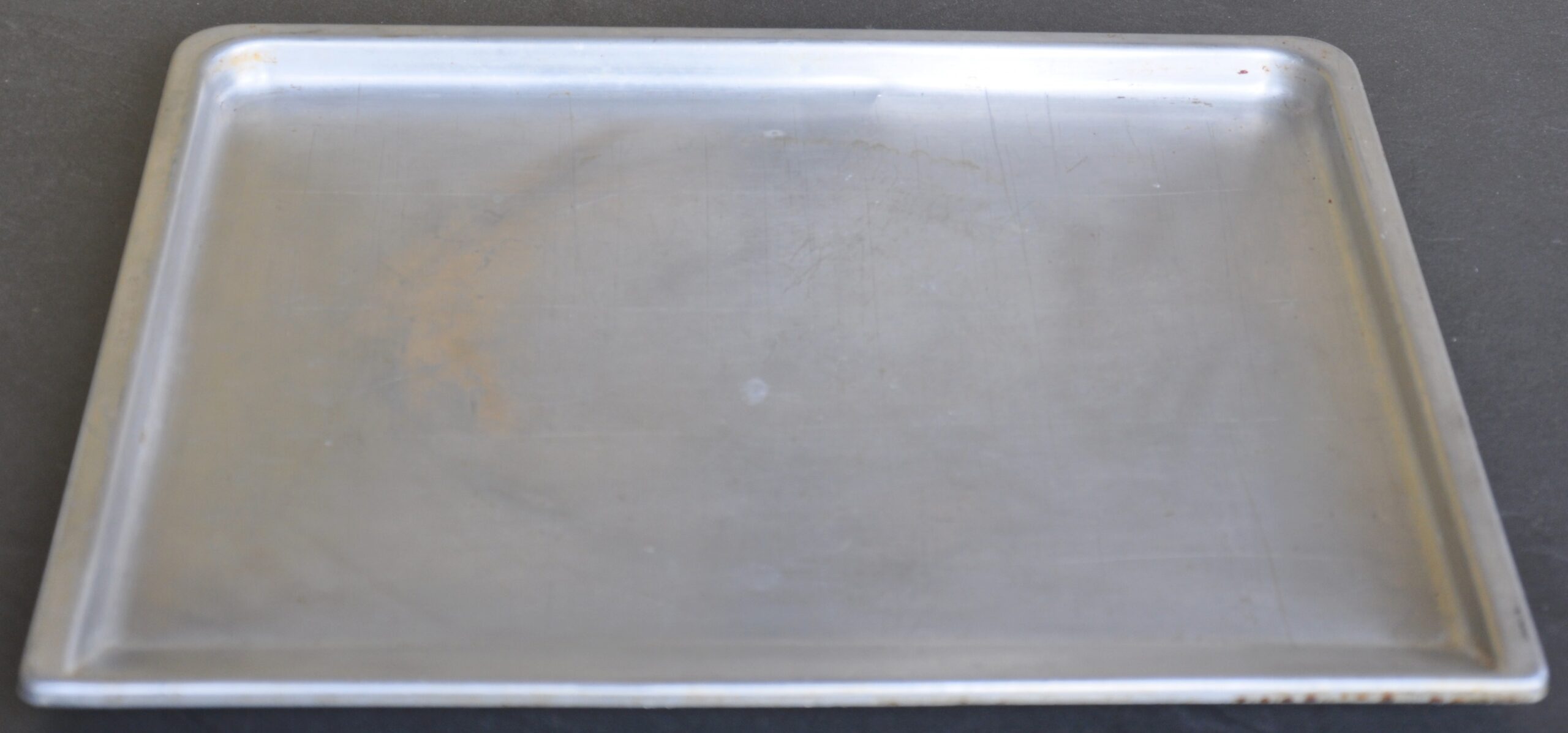
I’m standing at the sink scrubbing a baking sheet I’ve already washed, wondering why it still looks dirty.
There’s no food stuck to it. It doesn’t feel greasy. But those brown marks are still there, and I keep thinking another minute with the sponge might do it. So I give it another minute.
At some point, I’m no longer trying to get the baking sheet clean. I’m trying to get it to look like it did when I bought it.
And it’s hardly the only thing in the house that does this. Wooden cutting boards collect knife marks. White grout goes beige. Stainless steel loses its shine. Even a porcelain sink develops tiny scratches that make it look less clean than it is.
We’ve gotten so used to associating clean with new that we have trouble telling the difference.
When something looks dull, stained, or scratched, our instinct is to clean it again. A stronger product, a rougher sponge, more scrubbing. But sometimes we’re trying to remove something that isn’t dirt.
Take marble, for example. That cloudy patch you can’t seem to get rid of may not be a stain at all. Vinegar, lemon juice, and certain cleaning products can etch marble, actually changing the surface of the stone. You can scrub it all afternoon, but there’s nothing sitting on top to remove.
Or think about those melamine sponges that seem to make scuff marks disappear. They’re abrasive, which is why they work. But use one on a painted wall or cabinet, and you can end up removing some of the finish along with the mark. Now you’ve got a shiny or dull patch that looks like another cleaning problem.
The harder we try to make something look clean, the more damage we can do.
Dirt sits on a surface. A stain sits in it. Wear is the surface itself, changed. Dirt can be cleaned away, and some stains can be removed. But you can’t scrub away a scratch or put a worn finish back with a sponge.
Cleaning is about more than appearances. A scratched sink can be perfectly clean. Grout doesn’t have to return to its original color to be clean. The point is to take care of the things we own, not wear them out in the process.
Why do we expect things we use every day to look like nobody ever used them?
Think about how we first see the things we buy. Everything looks its best in the packaging, under store lighting, or in a photograph on a website. “Like new” is one of the highest compliments we can give something we’re reselling.
And then there are all those before-and-after cleaning videos. I enjoy a good one as much as anyone, but they can leave us thinking a successful cleaning should make everything look the way it did on day one. Somewhere along the way, we started confusing well cared for with barely used.
Which is a strange expectation when you think about it.
We buy cutting boards so we can chop things on them, then wish they didn’t have knife marks. We use baking sheets for hundreds of dinners and expect them to look like they’ve never been in an oven. We want our sinks to handle everything from greasy pots to muddy hands without ever showing their age.
We want our homes and everything in them to work hard for us. We just don’t want them to show it.
There’s a point where cleaning stops being cleaning and turns into an attempt to undo time.
Cleaning products are pretty bad time machines.
Which brings me back to that baking sheet.
Maybe there’s still some baked-on residue I could remove. But if what’s left is years of use, another round of scrubbing isn’t going to make it new again.
And I don’t need it to be new. I need it to be clean.
The goal isn’t to make everything look as though nobody has lived there. Some of the cleanest things in the room still look like somebody has.