By Robin Murphy
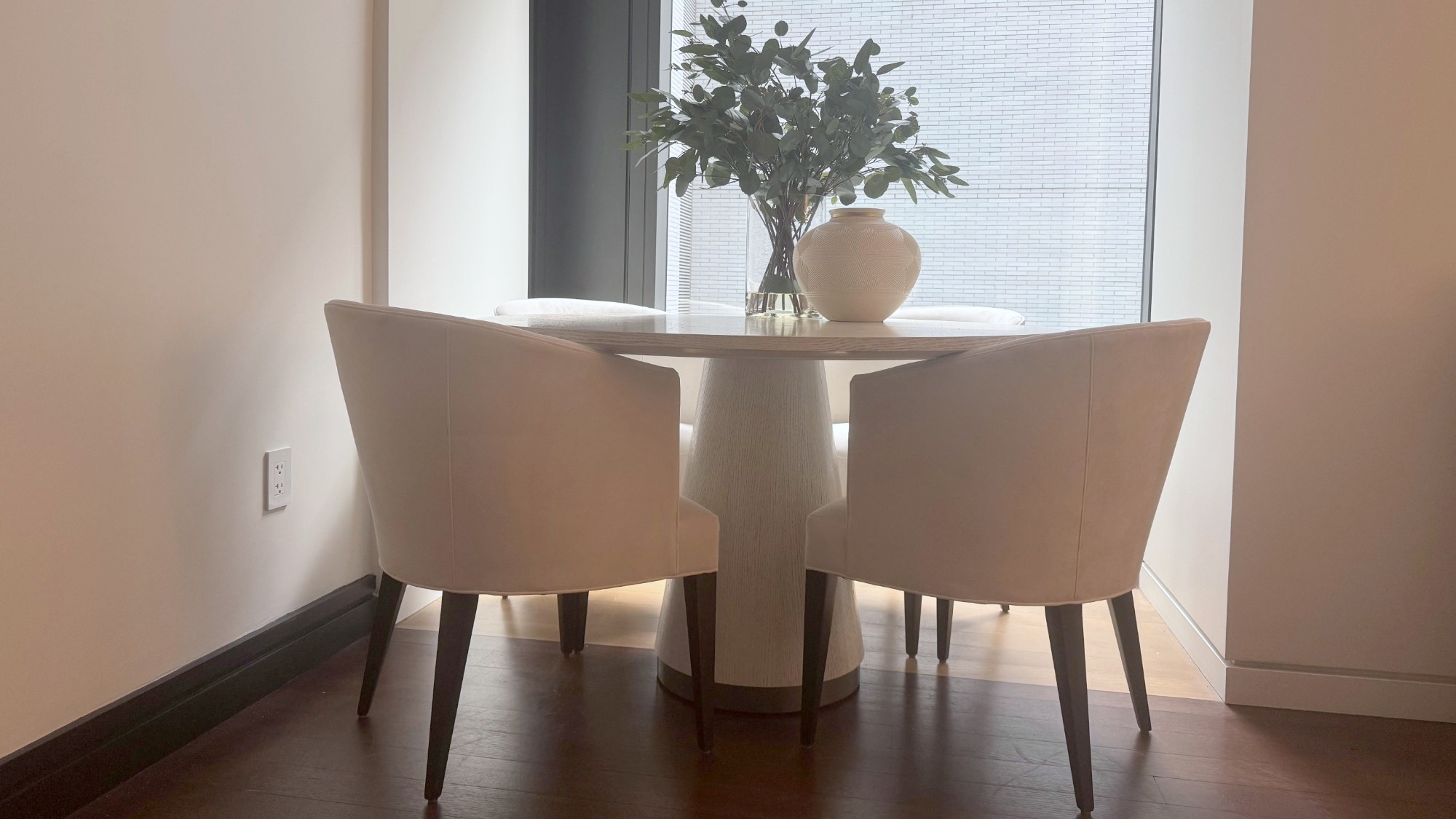
I don’t have a rug under my dining table. Practically speaking, this is an excellent decision. Crumbs fall on the floor. Chairs slide easily. If someone spills wine, I don’t have to decide whether the stain is now part of the design.
And yet the room feels like it’s missing something. Not furniture. The table is there. The chairs are there. Everything works exactly as it should.
It just looks a little naked.
Which is strange, because putting a rug under a dining table is not an obviously sensible idea. Of all the places in a house where you might lay down a large piece of fabric, we chose the one directly underneath people eating spaghetti, drinking coffee and dropping food. We don’t carpet the kitchen for a reason. Well, not anymore. The ’70s tried.
So why does a rug seem to belong under the dining table?
I think part of the answer is that the rug is doing something the table can’t quite do on its own: it gives the furniture a boundary.
Without one, the table and chairs are separate things sitting on the floor. Add a rug and suddenly they read as a group.
This becomes even more obvious in an open floor plan, where the kitchen, dining room and living room may technically be one enormous space. A rug can create a room without putting up a wall. It says: this is the dining room. Fabric can do that.
The rug changes other things too. Hard floors bounce sound around. Chairs scrape. Forks and knives clatter. A rug softens some of that. It also adds warmth, and not just the kind you can measure with your feet. A table sitting on a bare floor can look perfectly good, but put a rug underneath it and the whole arrangement somehow feels more settled, more intentional, like it belongs there.
None of this makes the rug any less ridiculous when somebody drops gravy on it.
And once you decide to put one there, there are rules. It has to be big enough that the chairs stay on it when you pull them out. Too small and the back legs catch the edge every time somebody sits down.
It also has to survive the job we’ve given it. A pale, delicate rug under a table used by children may technically be a design choice. It is also an act of optimism.
That’s the bargain: the dining-room rug makes the room harder to clean and nicer to be in.
We make versions of this bargain all over our homes. Curtains collect dust, but a room without them can feel exposed. Throw pillows have to be moved before you can sit comfortably on the sofa, yet we keep buying them. Upholstered dining chairs are clearly a gamble involving tomato sauce, but people choose them anyway.
Homes aren’t designed entirely around what is easiest to clean.
Thank goodness. If they were, we’d probably live in rooms with drains in the floor.
The rug isn’t really there to protect the floor. It certainly isn’t there to make cleanup easier.
It’s there because sometimes a room needs something that says: this is where we gather.
A table does some of that on its own. But the rug makes the space around the table part of the arrangement too. The chairs belong to the table. The table belongs to this spot. The whole thing feels less like furniture placed in a room and more like a place.
Which is a lot of emotional responsibility for something we’re probably going to spill coffee on.
I still don’t have a rug under my dining table. I have very good reasons.
Apparently the room doesn’t care.