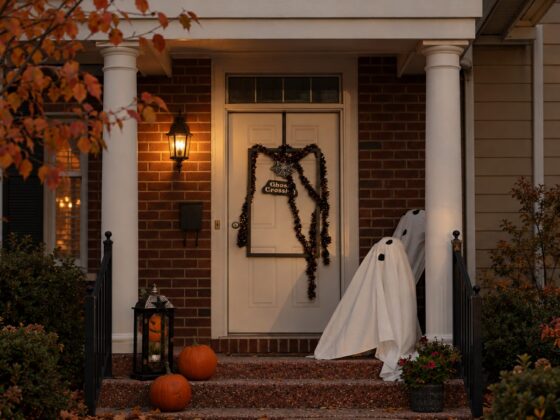
It’s the time of year when people buy cobwebs in a bag and spend twenty minutes making the front porch look as though nobody has touched the place in years.
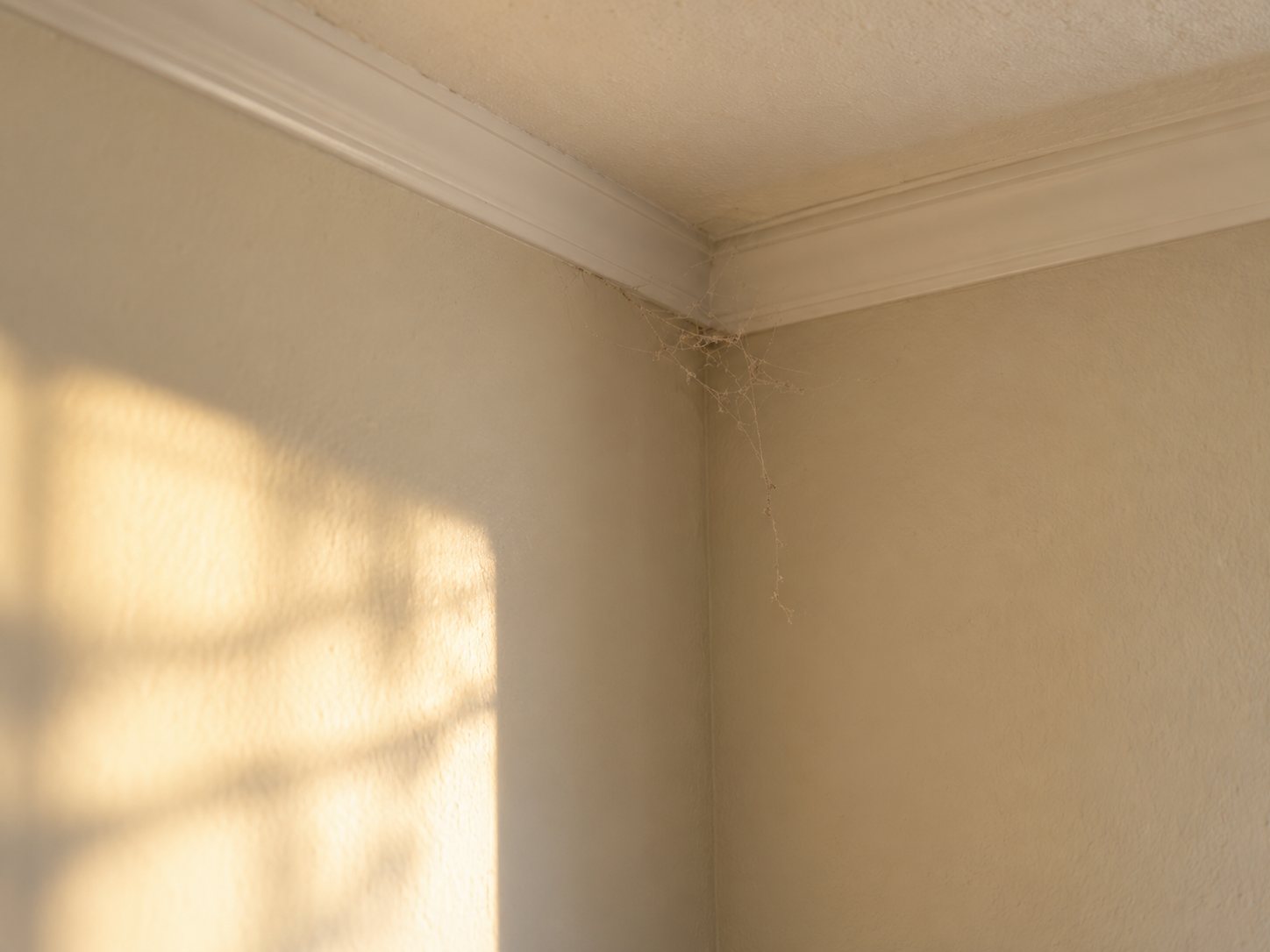
Meanwhile, the real ones are up on the living room ceiling, doing it for free. You spot a strand in the corner and immediately wonder how long you’ve been walking past it.
A loose tangle can look as though a spider started something and lost interest. We’re used to the beautiful wheel in children’s books. Neat spokes, a little dew, maybe a few words about a pig. But some spiders build tangled webs from the start. The mess is the design. That web may still be catching dinner.
The shape won’t tell you how old a web is. The dust will.
Spiders do a little housekeeping of their own. They keep their webs clean so they keep working.
Once a web is abandoned, it keeps catching whatever drifts into it. Dust, lint, a little pet hair. Eventually, a fine thread becomes the gray, drooping strand you can see from across the room when the light comes in sideways.
So the cobweb you spot usually isn’t new. It’s the one that’s been collecting for a while. A dust problem with a spider’s signature on it.
The plastic ones, of course, will need your help coming down, too.