The Junk Drawer Is Doing Its Job
Every kitchen seems to have one drawer that has given up on categories.
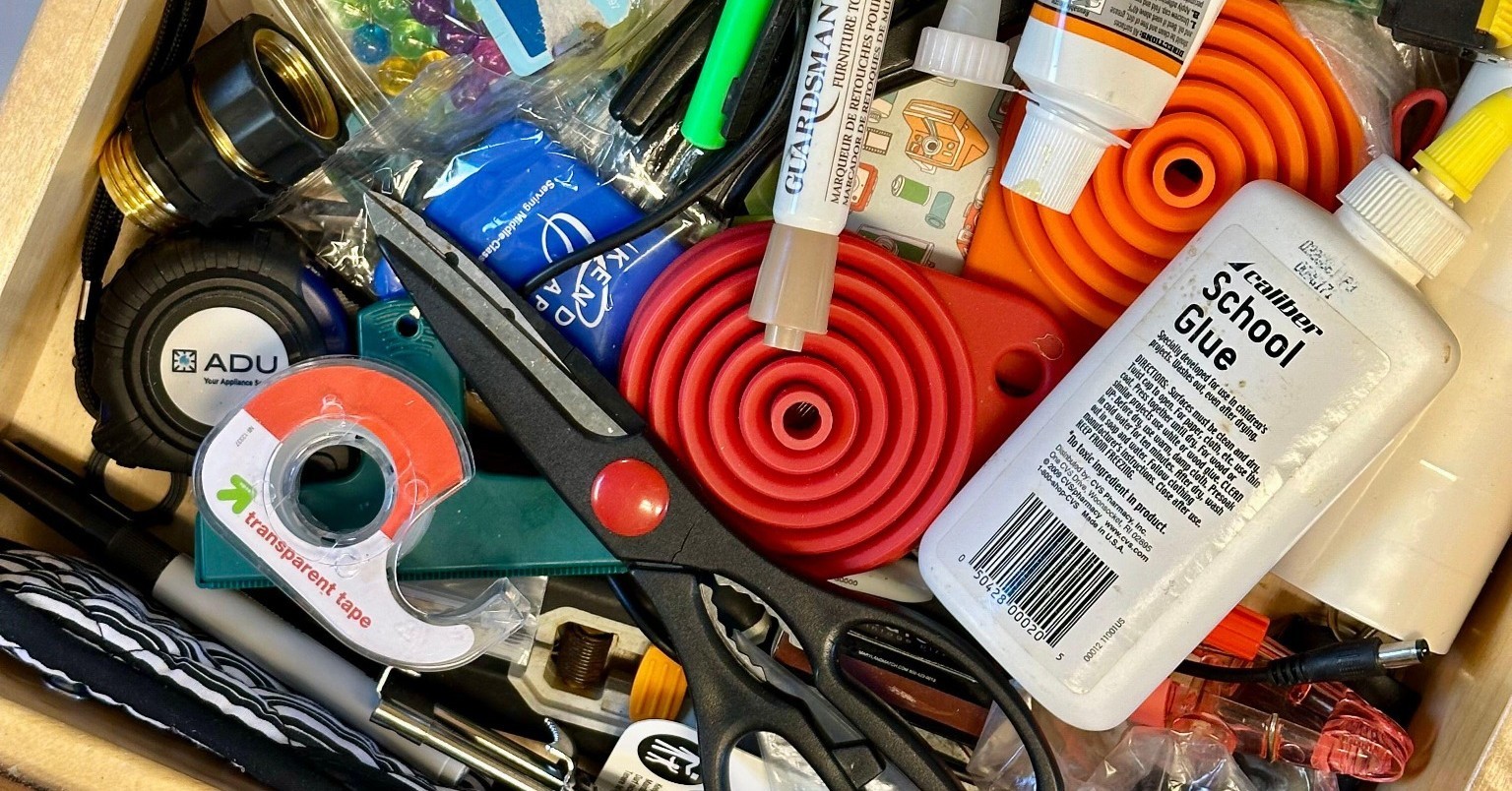
Open it and you might find batteries, tape, scissors, birthday candles, a screwdriver, three pens, an instruction manual for something you no longer own and a key nobody recognizes. There is usually at least one small plastic piece that looks important enough that no one is willing to throw it away.
We call it the junk drawer, which makes it sound like a failure.
The rest of the kitchen is supposed to make sense. Forks go with forks. Spices go together. Dish towels have a drawer. Even aluminum foil and plastic wrap usually know where they live.
Then there’s this drawer.
I used to think the goal was to get rid of it. Surely, if the kitchen were organized properly, everything in that drawer would have a real home.
Now I’m not so sure.
Because the things that end up there usually have something in common. They’re useful enough to keep, but not important enough to deserve a drawer of their own.
Where exactly should you store two spare furniture pads? Or the tiny screwdriver that came with your eyeglasses? Or the extra button from a coat? You could create a beautifully labeled container for each one, but at some point the organization becomes more work than the objects themselves.
The junk drawer lowers the stakes. Put it here. We’ll figure it out later.
Sometimes that is procrastination. A junk drawer can absolutely become a place where dead batteries, expired coupons and things nobody wants to deal with go to spend their final years. But a functioning junk drawer is different. You actually use the things in it. You know the tape is in there. You know there’s probably a pen. When somebody needs a screwdriver, this is the first place you look.
That isn’t disorder. It’s a category.
There’s something almost generous about allowing a house to have a place like that. We spend a lot of time trying to give everything a home, as though every object should have a permanent, logical address. But homes aren’t warehouses. Things come in, get used, lose their packaging, wait for repairs, migrate from room to room and occasionally become important for twelve minutes on a Tuesday.
Not every one of them needs its own system.
In fact, the more organized the rest of the kitchen becomes, the more useful the junk drawer may be. It catches all the odd little objects that would otherwise end up on the counter.
Counters are where indecision becomes visible.
A battery sitting there asks to be dealt with every time you see it. So does the mystery key. So does the packet of picture hooks you might need next month. And a counter covered in undecided objects is a counter that doesn’t get wiped.
Nobody cleans around a battery.
Put them in the junk drawer and the kitchen gets quiet again.
There’s a limit. If you have to brace your hip against the drawer while yanking it open because a roll of tape is wedged against the top, the system may need some attention.
But I don’t think the goal should be an empty drawer.
An empty junk drawer would almost be suspicious.
A house creates leftovers that aren’t trash. Little tools. Spare pieces. Temporary objects. Things that matter, just not enough to warrant a designated bin with a label on it.
They need somewhere to wait.