If the internet had a patron saint of cleaning advice, it would probably be a mason jar full of vinegar and baking soda.
The recipe appears everywhere. Clean your drains. Clean your sink. Clean your shower. Clean your dishwasher. Clean your washing machine. Clean your soul.
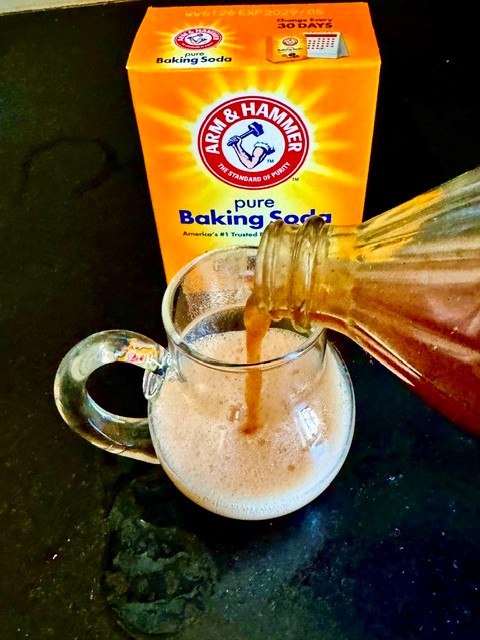
Just add vinegar. Add baking soda. Watch it fizz.
The fizz is important.
It’s also the reason this cleaning hack refuses to die.
People love watching something happen. We like bubbles. We like foaming action. We like the feeling that chemistry is occurring right in front of us. It feels productive. Scientific, even.
The problem is that chemistry is occurring. Just not the chemistry most people think.
When vinegar and baking soda are mixed together, they react almost immediately. The bubbling comes from carbon dioxide gas being released as the two ingredients neutralize each other. The dramatic part is real. The useful part is often gone within seconds.
By the time the fizzing stops, you’ve largely converted an acid and a base into water, carbon dioxide, and a salt called sodium acetate. In practical cleaning terms, you’ve taken two products with cleaning properties and used them to cancel out much of what made them useful in the first place.
It’s a little like hiring two people to pull a car in opposite directions and congratulating yourself on the exercise.
This doesn’t mean vinegar is useless. It doesn’t mean baking soda is useless. It means they are often more effective separately than together.
Vinegar is an acid, which makes it useful for certain jobs. It can help dissolve mineral deposits, water spots, and soap scum. Baking soda is a mild abrasive that can help with scrubbing and odor absorption. Both have legitimate uses. The internet’s favorite cleaning hack is what happens when they meet.
And about drains, the hack’s favorite venue: whatever improvement people notice usually comes from the kettle of hot water they pour down afterward. The fizz gets the credit. The hot water often does the work.
This is where the story usually takes a turn toward “natural cleaning.”
Natural is not a cleaning category.
Appropriate is.
Vinegar, in particular, gets treated online as though it is universally safe. It isn’t. Many stone surfaces, including marble, travertine, limestone, and other calcium-based materials, can be damaged by acidic products. Vinegar can etch the surface, dull the finish, and gradually degrade sealers and protective treatments. Certain hardwood finishes, specialty coatings, and other materials may not appreciate repeated exposure either.
The damage is rarely dramatic. Nobody pours vinegar onto a marble countertop and watches it dissolve like a movie villain. Instead, the surface quietly loses some of what was protecting it. Water stops behaving the way it used to. The sealer retires years early.
Which brings us back to the only question that matters in choosing any cleaning product: not what’s strongest, not what’s most natural, not what’s fizzing most impressively in your sink, but what’s appropriate for the soil you’re removing and the surface you’re protecting.
The soil is temporary. The surface is what you keep.
The internet rewards spectacle. Professional cleaning rewards results. One tends to favor dramatic before-and-after videos, bubbling reactions, and miracle solutions assembled from pantry ingredients. The other tends to favor methods that work consistently, safely, and predictably over the long haul.
Which is admittedly less exciting.
Nobody has ever gone viral by correctly identifying the appropriate pH range for a sealed stone countertop.
But your countertops may appreciate it.
The next time you see vinegar and baking soda being celebrated as a magical cleaning combination, remember what you’re actually watching.
You’re watching a chemical reaction.
Whether you’re watching effective cleaning is an entirely separate experiment.