Big Scrub would very much like you to believe that every surface in your home is a germ emergency waiting to happen.
Every aisle offers another way to kill 99.9% of germs. There’s a disinfecting spray for the counter, a disinfecting wipe for the doorknob, an antibacterial cleaner for the sink, and another product for whatever’s left.
The message is hard to miss: if you really care about your home, you should be disinfecting constantly.
Here’s what gets lost.
Most of your house isn’t dangerous.
It’s just dirty.
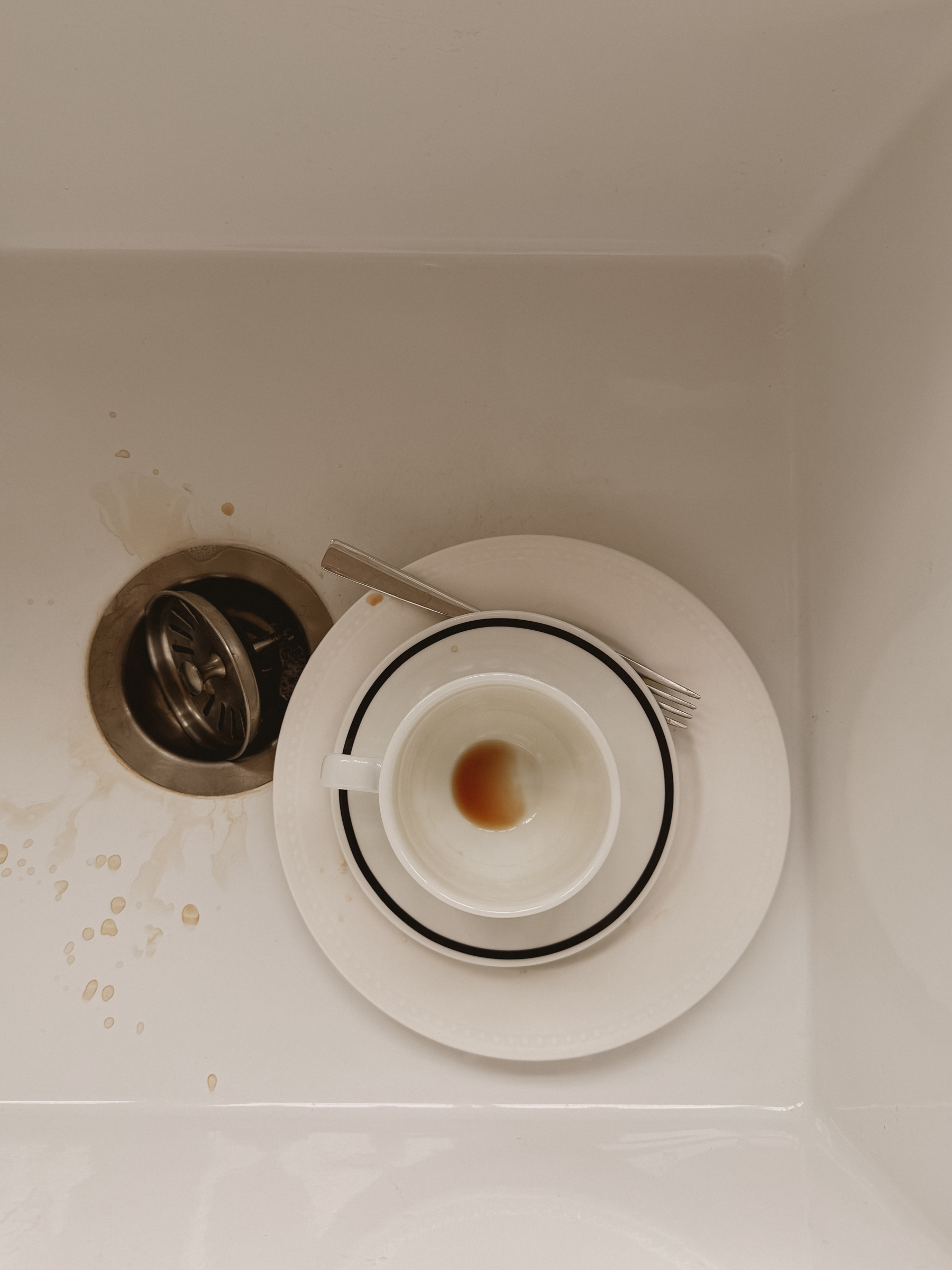
The spaghetti sauce splattered on the backsplash is dirty. The greasy fingerprints on the cabinet door are dirty. The coffee ring on the counter is dirty. None of those things are a health emergency. They’re simply signs that someone lives here.
Cleaning removes dirt, grease, crumbs, and germs by physically wiping them away. Sanitizing lowers the number of germs to a safer level. Disinfecting uses chemicals designed to kill them. They’re related, but they aren’t interchangeable, and they aren’t all necessary all the time. In fact, the CDC says that for most homes, most of the time, cleaning removes most germs, and disinfecting generally isn’t needed unless someone is sick.
At some point, “clean” stopped being enough.
We wanted antibacterial. Then antimicrobial. Then sanitizing. Then disinfecting.
Without really noticing, we started holding ordinary kitchens to something closer to hospital standards.
The surprising part is that many people aren’t actually disinfecting when they think they are.
Disinfectants only work when used according to the label. That usually means cleaning the surface first, applying the disinfectant, and then keeping the surface visibly wet for a specific amount of time known as the dwell time or contact time.
That’s where things often fall apart.
Take disinfecting wipes. Many people grab a wipe, swipe down a countertop, toss the wipe, and move on. The crumbs are gone. The fingerprints are gone.
The counter is clean.
But disinfecting may never have happened.
Clorox Disinfecting Wipes, for example, require the surface to remain visibly wet for four minutes to achieve the disinfecting claims on the label. If your counter dries in thirty seconds, you’ve cleaned it. Whether you’ve disinfected it is a different question. And the famous “kills 99.9% of germs” assumes all of this went right: a pre-cleaned surface, enough product, and the full contact time. It’s a laboratory result, not a description of the ten-second wipe most of us actually do.
The average disinfecting wipe spends much of its life cleaning surfaces while being credited for disinfecting them.
None of this means disinfecting is unnecessary.
If someone has norovirus, the flu, COVID, or another contagious illness, disinfecting high-touch surfaces makes good sense. Bathrooms deserve more attention than most rooms. Food safety has its own rules. Households with immunocompromised family members may need a different approach.
The point is that disinfecting should have a reason.
Cleaning has always been about making a home healthier, more comfortable, and more pleasant to live in.
Somewhere along the way, we started treating every crumb like a medical event.
Most days, your home doesn’t need to be sterile.
It just needs to be clean.