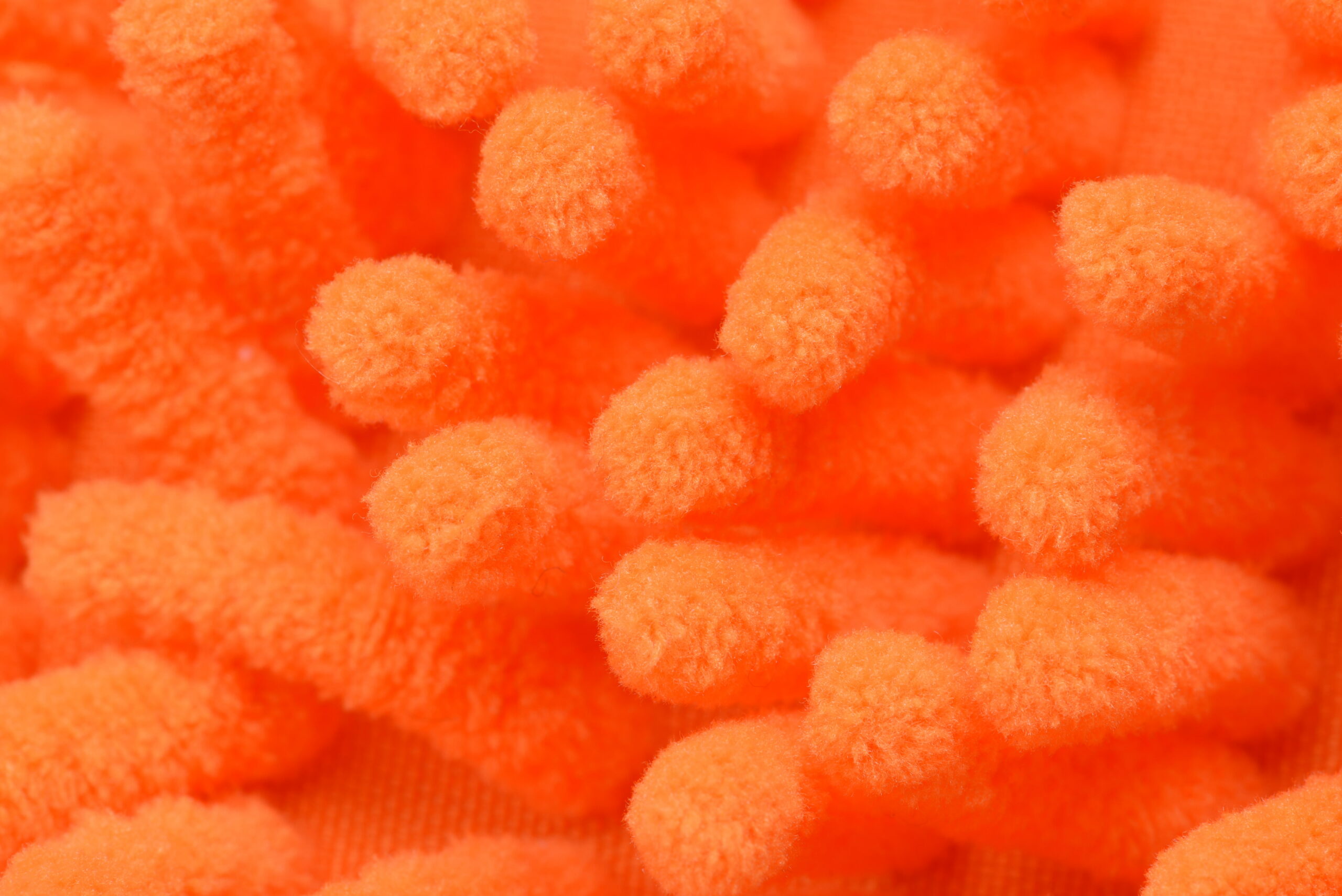
This may be an odd confession from someone who spends a lot of time thinking about cleaning, but I’ve never completely trusted microfiber.
Give me a dirty mirror, a dusty bookshelf, or a greasy kitchen counter, and microfiber will usually outperform an old cotton rag. We know why it works. The fibers are incredibly fine, allowing them to grab dust, dirt, oils, and other particles that ordinary cloths often push around.
That’s the part everyone agrees on.
The part I’ve always struggled with is what happens next.
If microfiber is so good at holding onto things, does it really just let go in the washing machine?
Microfiber works best when it’s relatively dry. Add water, detergent, and agitation, and the environment changes completely. The fibers release much of what they’ve captured, and the soils are carried away in the wash. If that weren’t true, microfiber would become useless after a few cleanings.
But that doesn’t mean every question has been answered.
Over the years, I’ve seen enough well-used microfiber cloths to know something changes over time. Some lose their grip. Others become less absorbent. A few develop a strange stiffness. Some never quite seem fresh again, no matter how carefully they’re washed.
Part of that isn’t mystery at all. Minerals can build up over time, and improper laundering can reduce the very properties that make microfiber effective in the first place. Even after accounting for all of that, I’ve always found microfiber’s biggest selling point inseparable from its biggest question.
The better it is at grabbing things, the more I wonder what it’s still holding after hundreds of wash cycles.
There’s also the environmental side of the story.
Every time we wash microfiber, tiny synthetic fibers can break free and enter wastewater. Many are captured at wastewater treatment plants. Some aren’t. Those fibers can eventually become part of the growing microplastic problem showing up in rivers, lakes, oceans, wildlife, and even human bodies.
It’s an uncomfortable irony. One of the cleaning industry’s favorite tools may also be contributing to a different kind of contamination.
That doesn’t automatically make microfiber bad. Cotton has environmental costs, too. It requires land, water, energy, and often significant agricultural inputs. Microfiber cloths last a long time, can clean many surfaces with less chemical cleaner, and can replace mountains of disposable paper towels.
Like most things, the story isn’t simple.
Maybe that’s what bothers me about the way microfiber is often discussed. The conversation is usually framed as a celebration. Microfiber works. And it does.
The more I’ve used microfiber, the less interested I’ve become in celebrating it and the more interested I’ve become in understanding it.
I don’t know exactly what changes inside an old microfiber cloth after years of use. I don’t know every environmental tradeoff it carries over its lifetime. What I do know is that, after handling thousands of them, I’ve never completely lost the feeling that there’s more going on than we fully understand.
I’ll keep using microfiber. I’ll also keep wondering about it.






1 comment
Enjoyed this article fully! Thank you.