Your house didn’t actually change when the text arrived saying, “We’ll be there around six.”
The audience did.
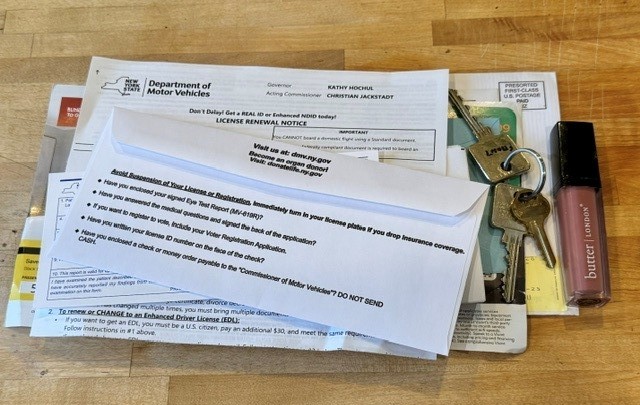
Five minutes earlier, the pile of mail on the counter was perfectly acceptable. Now you’re looking at it as though it has personally embarrassed you. Suddenly you see the fingerprints on the refrigerator, the shoe in the hallway, the bathroom faucet that needs immediate attention.
I know this because I do it too. And it’s made me realize that “clean enough” is a moving target. My definition has changed with every version of my household, from living alone to dealing with the particular diplomatic challenge of a teenager’s bedroom.
I didn’t invent my definition of clean from scratch
Like most people, I think I inherited a lot of my ideas about what a house is supposed to look like before I ever stopped to question them. We all grow up with household rules, even if nobody actually calls them rules. Maybe beds get made every morning. Maybe dishes never stay in the sink overnight. Maybe shoes come off at the door. Maybe the living room gets picked up before bed.
Then we grow up and carry some of those standards with us without realizing we’ve done it. They stop feeling like preferences and start feeling like facts.
When I lived alone, I got to make all the rules
Living alone was probably the purest version of my own cleaning standard because there was nobody else to negotiate with. If there was a sweater on a chair and it didn’t bother me, there was no second vote. I could leave something on the counter until I decided I was done looking at it. Nobody else had a different opinion about when the floor needed vacuuming or whether something needed to be put away right this second.
And I learned pretty quickly that I didn’t care equally about everything. A little clutter? I could live with it. A gritty floor? Much harder. A stack of mail sitting around gets a fairly generous grace period from me. A bathroom that feels dirty gets my attention much faster.
I suspect most of us have our own version of this. There are things we notice immediately and things our eyes glide right over. When you live alone, those preferences can masquerade as your personal definition of clean without causing much trouble.
Then someone else moves in.
Two people can look at the same kitchen and see two different kitchens
I’ve definitely looked around a kitchen and wondered how another person could possibly think it was clean when I could still see crumbs under the toaster. And I’m sure I’ve been on the other side of that equation too, blissfully unaware of something that was driving somebody else crazy.
That’s one of the harder things about sharing a home. If something looks obviously messy to me, it’s surprisingly easy to believe it must look obviously messy to everyone else too.
Except it doesn’t.
We notice different things. We have different thresholds, and we bring completely different household histories into the same home. Something that barely registers for one person can be the first thing the other sees when they walk into the room.
Of course, when you live together, you eventually have to agree on some standards. But there’s a big difference between saying, “We need to figure out how we’re going to keep this kitchen,” and thinking, “Any reasonable person would know this kitchen isn’t clean.”
Then kids change the rules
When kids are little, the definition changes again because the house is simply being used harder. There’s more laundry, more food, more fingerprints, more stuff, and an astonishing number of small objects appearing in places where you don’t remember putting them.
You can vacuum a room and turn around to find a child eating a cracker that somehow produces three times its body weight in crumbs.
At some point I realized I couldn’t apply the same standard to a house full of children that I could to a house with one adult living in it, unless cleaning was going to become my full-time occupation. I got better at distinguishing between a house that was dirty and a house that simply looked as though children lived there.
Those aren’t the same thing.
Toys on the floor never bothered me in the same way as a bathroom that needed cleaning. A pile of kid stuff wasn’t the same as old food sitting around. I could live with evidence that children were actually using the house.
And then the children became teenagers.
That introduced an entirely different definition of “clean enough.”
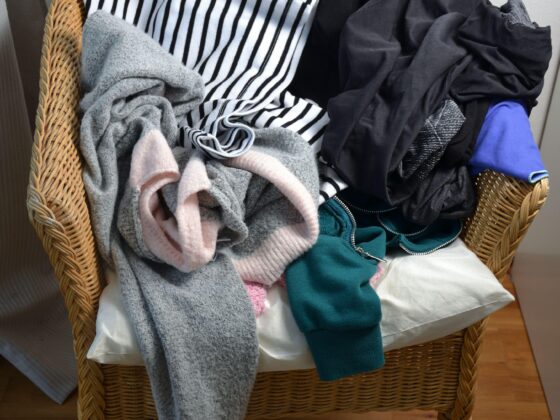
Suddenly we weren’t talking about toys scattered across a playroom. We were talking about clothes on the floor, glasses that didn’t quite find their way back to the kitchen, wet towels, and bedrooms that seemed to operate under their own system of government.
I’ve had my share of arguments about messy rooms. Right now, one of my daughters is home from college for the summer, so I’m getting another opportunity to decide exactly how much I care about what’s happening on the other side of her bedroom door.
Sometimes I look in there and have to remind myself that my relationship with my daughter is more important than whether her room meets my definition of clean.
I’m also extremely grateful that bedrooms come with doors.
I’m not saying anything goes. If dishes are growing civilizations or something in there is going to affect the rest of the house, I reserve the right to intervene. But I’m trying to get better at recognizing the difference between something that actually needs my attention and something I simply want done my way.
That distinction is much easier to make when the bedroom door is closed.
So what is clean enough?
What was clean enough when I lived alone isn’t what felt clean enough when I shared my home with someone else. Raising children changed it. Teenagers changed it. Having an adult daughter home for the summer is apparently offering another course in the subject.
I’m sure I’m not finished.
What I want is to be able to tell the difference between the things that actually need attention and the preferences I’ve quietly promoted into rules. Some days I can.
But most of the time I still don’t think, I would prefer the kitchen counter clear.
I think, The kitchen counter is a mess.