There is a strange thing that happens when we see someone else’s messy house. We don’t just see dishes, laundry, or a pile of mail. We start writing a character reference.
A sink full of dishes becomes irresponsible. A cluttered counter becomes disorganized. A spotless bathroom becomes disciplined. A neatly made bed suggests someone has their life together, even though the bed may be the only thing currently cooperating.
We do it to ourselves too. We look around after a difficult week and don’t simply think, The floors need vacuuming. We think, I should be doing better.
Somewhere along the way, cleaning stopped being ordinary household maintenance and became evidence of who we are.
I own a cleaning company, so I am obviously not going to argue that cleaning doesn’t matter. A clean home is easier to live in. It can function better, feel calmer, and support the health of the people inside it.
But a clean house is not proof of good character, and a dirty one is not evidence of bad character.
The house is not qualified to make that determination.
A surface becomes a verdict
Cleaning is easy to moralize because the evidence is visible.
You cannot see whether someone remembered a friend’s birthday, helped a coworker, worried all night about a child, or made a difficult decision with enormous care. You can see fingerprints on the refrigerator.
A person can be patient, generous, competent, and completely overwhelmed by laundry. Another can have an immaculate kitchen and be difficult in every other room of life.
Still, we treat the condition of a home as though it reveals something essential. We call people neat, messy, clean, dirty, organized, or careless, and the descriptions rarely stay attached to the house. They attach themselves to the person.
Even the language gives it away. We do not only say the kitchen is a mess. We say, “I am a mess.”
That is a great deal of authority to hand to a kitchen counter.
Why cleanliness makes such convincing evidence
The house is full of visible outcomes.
The towels are either clean or they are not. The dishes are either in the sink or they are not. The floor has crumbs on it. The trash is full. The laundry is folded, waiting, or quietly becoming part of the furniture.
Because the results are so easy to see, we assume the effort behind them should be equally simple to understand.
It is not.
Over thirty years, I have learned that the people who apologize most for their homes are often standing in rooms most visitors would call clean. I have also seen two houses look equally orderly for completely different reasons: one because the household has a steady routine, the other because someone has been panic-cleaning since dawn. From the doorway, you cannot tell which is which.
A finished room doesn’t reveal how long the work took, who did it, who paid for it, what else was postponed, or whether the person cleaning felt calm, frantic, resentful, proud, or exhausted. The surface is real evidence. It is simply evidence with most of the story missing.
A messy room contains information too, but not the information we usually claim it does. It may show that a household is short on time, energy, money, storage, cooperation, or all five. It may show that the people living there have been cooking, working, caring for children, recovering, grieving, entertaining, or simply choosing to do something else.
Those are real signals.
The mistake is taking a visible condition and using it to reach an invisible conclusion about character.
We keep confusing the two because the first one is sitting right in front of us.
Household work is designed to disappear
Cleaning also carries moral weight because successful household work is nearly invisible.
When the trash is emptied, nobody notices the absence of trash. When the towels are washed, they simply appear clean. When the bathroom is maintained, it looks like a bathroom rather than evidence that someone has repeatedly scrubbed, wiped, replenished, washed, dried, and remembered.
The better the work is done, the less visible the work becomes.
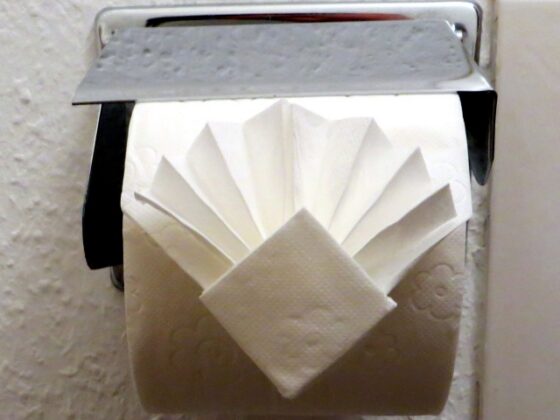
A missed task behaves very differently. The empty toilet paper roll announces itself. The crumbs wait on the floor. The laundry blocks the chair. The refrigerator produces a container whose contents have entered an advanced stage of diplomacy.
Success disappears. Failure sits on the counter.
That imbalance makes household work an excellent source of judgment. Everything completed vanishes into normalcy, while everything unfinished remains available for inspection.
This is also why the person responsible for the home can feel as though the house is always building a case against them. The work already done has left no witnesses. The task missed yesterday is still in the sink.
Who gets graded for the house?
The moral weight of cleaning is not distributed evenly.
In many households, one person becomes the unofficial keeper of what the home looks like, what it smells like, whether there are clean towels, what is running low, and whether anyone will be embarrassed if somebody unexpectedly walks through the door.
Other people may contribute to the mess, but the condition of the house is still treated as a reflection of the person expected to manage it. The labor belongs to the household. The judgment lands on one person.
This turns housekeeping into more than work. It becomes reputation management.
The pressure is not only to clean. It is to make the work disappear so completely that the home looks as though it naturally maintains itself. The garbage leaves. The soap replenishes. The sheets change. The refrigerator stops containing anything alarming.
When this work happens, it is ordinary. When it does not happen, it becomes personal.
That is how a missed chore becomes a character flaw, but only for the person assigned responsibility for noticing it.
Shame does not clean particularly well
People sometimes assume that feeling bad about a messy house will motivate them to clean it.
Sometimes it does, briefly. Shame can produce an impressive burst of activity, especially when guests are twenty minutes away.
But shame is not a useful household system. It turns every unfinished task into evidence and makes cleaning feel like repayment for having allowed the house to become human.
Once cleaning becomes punishment, avoiding it makes perfect sense. The job is no longer only about washing dishes. It is about confronting everything those dishes have supposedly come to mean.
Lazy. Behind. Disorganized. Failing.
That is a lot to load into a cereal bowl.
The bowl is not disappointed in you. It just needs to be washed.
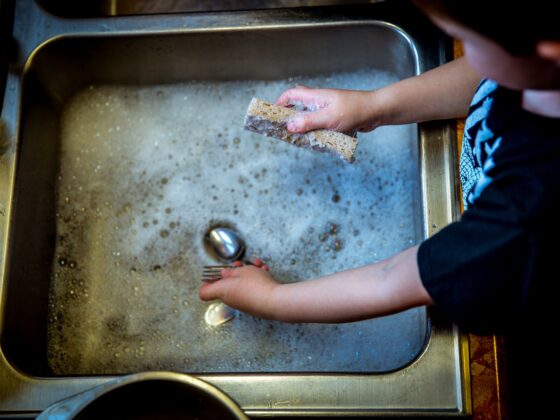
A sink of dishes is one problem. A sink of dishes being treated as proof that you cannot manage your life is a much larger one, and it still does not get the dishes washed.
Cleaning is care, but care is larger than cleaning
Cleaning can be an expression of care. Fresh sheets, a wiped counter, a clean bathroom, and a kitchen that works are all ways of looking after the people who live in a home.
But care does not always leave a polished surface behind.
Sometimes care looks like making dinner and leaving the pans until morning. Sometimes it looks like sitting with someone who needs you while the laundry remains unfolded. Sometimes it looks like using limited time and energy on the person rather than the room.
There are spotless homes without much warmth and cluttered homes full of it. Cleanliness can support comfort, but it cannot manufacture patience, safety, generosity, or belonging.
We recognize cleaning as one form of care and then make a larger leap: that cleanliness proves someone is caring.
It does not.
What the house can actually tell us
A house can tell us that cleaning happened. It can also tell us where life has been pressing.
The sink says someone cooked or ate. The laundry says bodies were clothed. The pile of mail says decisions arrived faster than anyone could make them. A crowded counter may reflect a crowded week. A bathroom running low on clean towels may reveal that the work of the household has outpaced the time available to do it. Sometimes it reveals nothing heavier than a person who decided the evening was better spent somewhere other than the sink.
Read correctly, these are not character defects. They are traces of the life happening inside the house.
The condition of a home can tell us something about routine, resources, help, capacity, and what has demanded attention lately. It can show us where a household is functioning easily and where it is carrying more than it can comfortably hold.
That is what the evidence is for.
We keep reading character into surfaces because surfaces are easy to see. Character is not. But the house was never offering a verdict on the people inside it.
It was showing us what their life has required.