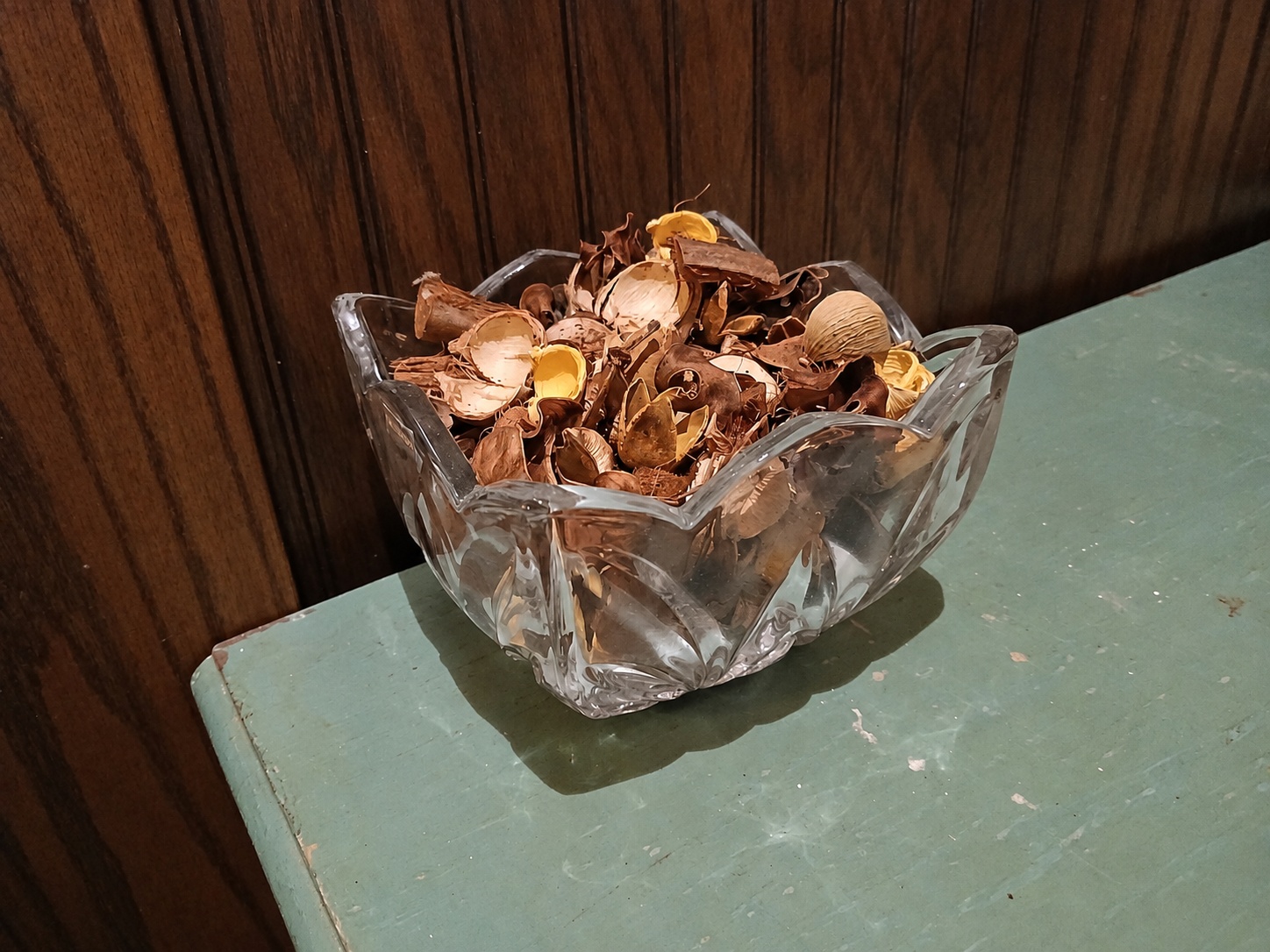
There was a time when a perfectly respectable bowl in a perfectly respectable living room might contain pinecones, wood shavings, dried rosebuds, curls of orange peel and several other things that looked as though they had been gathered from the floor of a particularly fragrant forest.
This was potpourri.
It sat on coffee tables. It filled baskets in bathrooms. It came in cellophane bags from department stores and gift shops. Sometimes it was purple. Sometimes burgundy. There were inevitably seed pods.
And then, somewhere along the way, it disappeared.
Not completely. You can still buy potpourri. But it has largely vanished from the visual language of the American home. We no longer seem to require a decorative bowl of dried vegetation in order to make a room smell like cinnamon.
What’s strange is that our appetite for making houses smell like something hasn’t disappeared at all.
So whatever happened to potpourri?
The first surprise is that the potpourri many of us remember wasn’t really the old-fashioned thing it appeared to be.
The word comes from the French pot pourri, literally “rotten pot.” It originally referred to a stew or mixture before acquiring its fragrant meaning in English in the 18th century.
And some early potpourri came remarkably close to earning the name.
Flowers and herbs could be layered with salt and left to age, with more plant material added as it became available through the season. The mixture might ferment and darken before spices and fixatives were added.
It was not necessarily something you wanted sitting uncovered beside the remote control.
What mattered wasn’t what was in the container. It was what escaped from it.
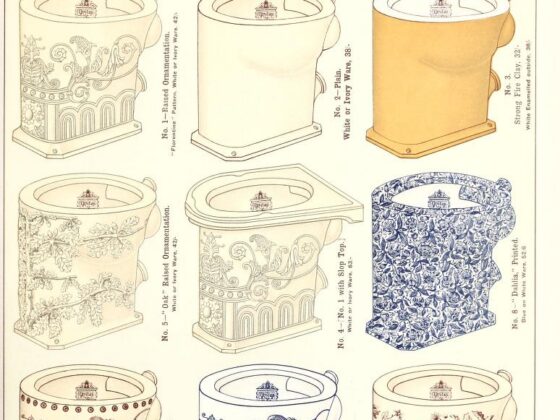
That helps explain the elaborate potpourri vessels produced in 18th-century Europe. Porcelain manufacturers made ornate jars and vases with pierced lids so fragrance could drift into the room. A Chelsea porcelain potpourri vase from around 1760 was designed with openings for exactly that purpose. Sèvres made elaborate perfume vessels too, including one bought by Madame de Pompadour in 1760.
The Corning Museum of Glass has a late-18th-century French garniture it describes as a kind of “scent machine” for the home: potpourri in the center, flanked by candleholders and flower vases.
So scenting a room was already part of decorating it.
But the decoration was the container.
The stuff producing the smell could stay hidden.
Martha Lloyd, who lived with Jane Austen and her family, recorded a potpourri recipe in her household book involving dried roses and lavender, orris powder, bergamot, cloves and cinnamon. The mixture could perfume rooms or be placed among clothes and linens.
And then comes my favorite detail in this whole story.
In 1888, Ladies’ Home Journal and Practical Housekeeper reported that “Japanese pot-pourri” had become fashionable enough that special vases were being devoted to it.
The magazine described the fashion as a revival of something great-grandmothers had done.
In other words, potpourri was already making a comeback in 1888.
Apparently we’ve been announcing its return for well over a century.
But the version many of us remember from the 1970s, ’80s and ’90s had changed again. Instead of hiding the fragrant mixture inside a pierced vessel, the mixture itself became the display.
Dried flowers. Colored leaves. Bark. Seed pods. Pinecones.
Some commercial potpourri eventually contained plant material that contributed relatively little fragrance of its own. Fragrance oils did much of the aromatic work.
The petals were now scenery.
And that turned out to be very marketable.
In 1985, the Associated Press reported that makers and marketers of potpourri, scented candles, perfumed soaps, sachets and other home-fragrance products said sales were approaching all-time highs.
Five years later, the Los Angeles Times visited a California company called Potpourri Foundry.
Founder Michael Fanning had started the business in his Long Beach garage in 1985 after buying $200 worth of dried petals, spices and other ingredients.
By 1989, sales had reached $3.7 million.
The company’s products were being sold through Bloomingdale’s, Nordstrom, Mervyn’s and Sears. Fanning also talked about consumers turning toward what he called the more “natural” side of home fragrance, in contrast with aerosol and other room fresheners.
For a moment, a bowl of dried flowers solved several problems at once.
It smelled good. It looked decorative. It seemed old-fashioned in a comforting way. And unlike an aerosol can, it could sit in the room pretending it had simply wandered in from the garden.
Then the competition got better.
Yankee Candle introduced its Housewarmer jar line in 1990, and by 1996 the company’s annual sales had passed $100 million. Candles offered fragrance, decoration, flame and ritual without requiring anyone to maintain a bowl of increasingly dusty pinecones.
Other formats followed: reed diffusers, wax melts, scented oils, automatic sprays and plug-ins.
Potpourri’s problem wasn’t that people stopped wanting scented homes.
It was that there were suddenly many easier ways to get one.
I’ve written before about how we learned to associate certain smells with cleanliness. Potpourri belongs to a different part of that story.
It’s about the object.
For centuries, scent had lived inside ornate vessels. Then the fragrant material itself became something worth displaying. And for a few decades, that bowl became a familiar piece of the room.
Then the room moved on.
Which makes it tempting to say potpourri went out of fashion.
I’m not sure it did.
Its particular combination of dried flowers, pinecones and decorative baskets certainly did. But the idea underneath it became so ordinary that we barely notice it anymore: a home can have a chosen scent, and that scent can be part of how the home feels.
Potpourri may not have lost to candles, diffusers and plug-ins.
It may have helped teach us to want them.
The bowl disappeared.
The idea escaped.