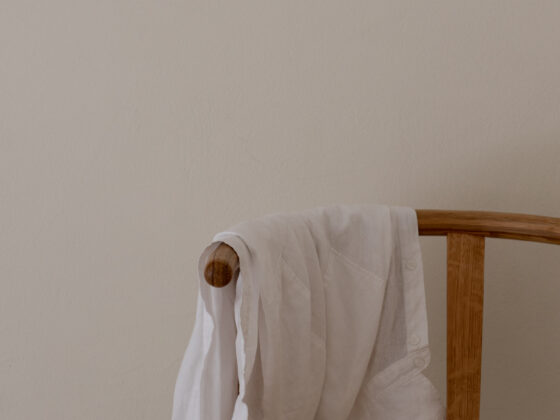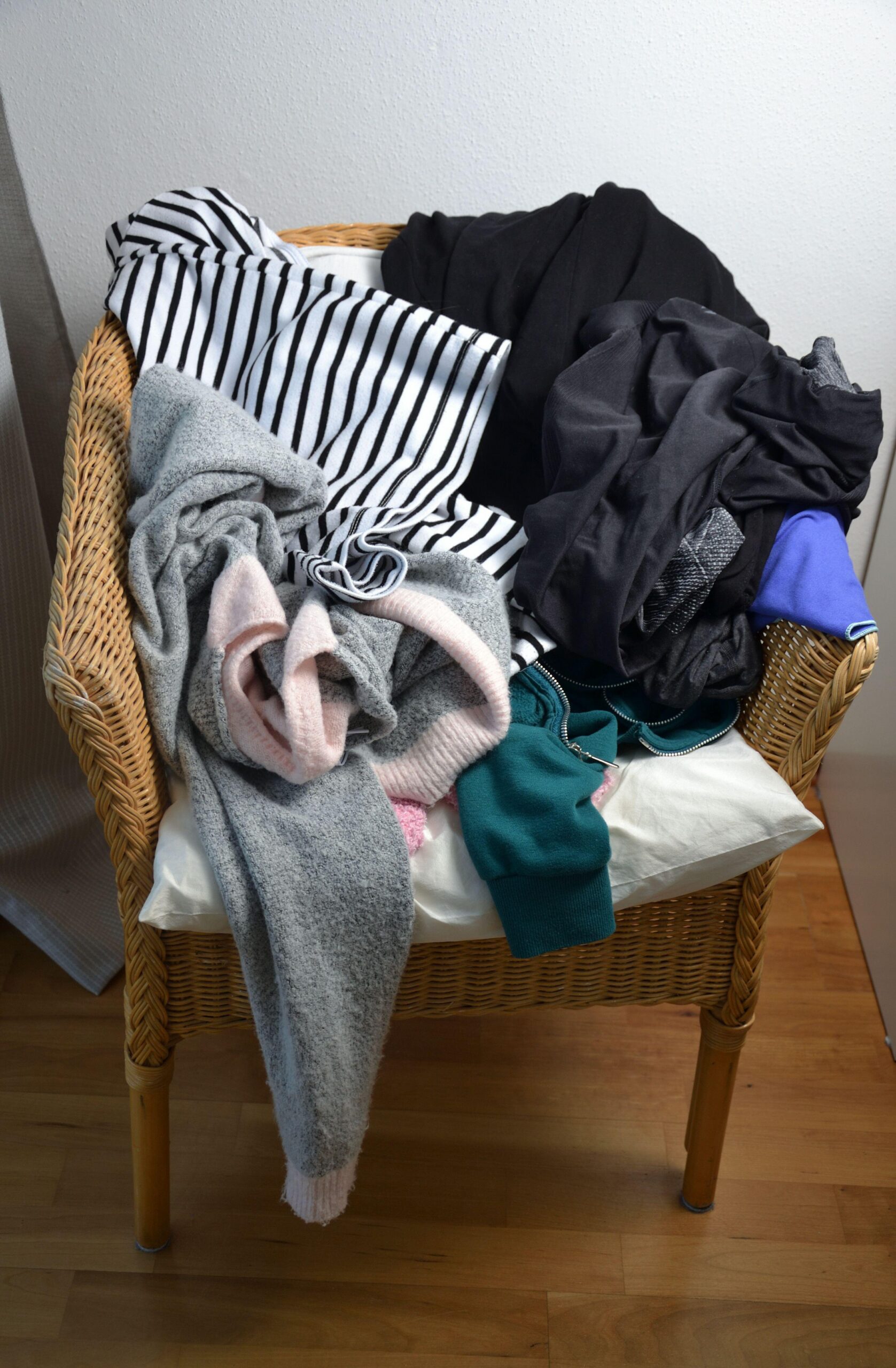
Most bedrooms have one. It may be an actual chair, but it could just as easily be a bench, a corner of the bed, the top of a dresser, or the exercise bike nobody has exercised on since February.
This is where the clothes go when they are not quite clean and not quite dirty: the jeans you wore for two hours, the sweater that never touched your skin, or the sweatshirt you might put on again tomorrow. None of it belongs back in the closet with freshly washed clothes, but the hamper isn’t right either.
So it lands on the chair. One sweater becomes two, the jeans acquire a jacket, and at some point the chair stops being furniture and becomes a geological formation made entirely of clothing.
I keep writing about this chair because I have one, an actual chair that keeps volunteering for the job no matter how often I clear it.
It’s tempting to see this as a housekeeping failure, but it may actually be a design problem.
Most laundry systems have only two answers
Our homes are generally set up to divide clothing into two categories. Clean clothes go in drawers or closets, and dirty clothes go in the hamper.
That seems perfectly reasonable until you wear something once and it lands somewhere in between. Real life contains an entire category of clothing that most bedrooms have no official place for. These clothes are not ready to be washed, but they are no longer clean in the same way they were when they came out of the laundry.
The system asks a yes-or-no question when the honest answer is, “It depends.”
The laundry chair fills that gap. It’s not random clutter so much as an unofficial holding station for clothing awaiting a decision. The problem isn’t that the chair exists. The problem is that it has no limits, no structure, and no clear exit plan.
The chair is storing decisions
Each item on the chair represents a small unresolved question. Will I wear this again? Does it need to be washed? Is it clean enough to hang back up? Did I take it off because I was warm, because I changed my mind, or because I spilled something on it?
Those decisions seem minor, but once clothing begins to pile up, the categories become harder to read. The clean-enough sweater gets tangled with workout clothes. A shirt that could have been worn again gets buried under something that definitely should not be.
Eventually, the entire pile starts to feel dirty, even when much of it isn’t. At that point, people often solve the problem by washing everything.
That clears the chair, but it creates more laundry, uses more water and energy, wears clothing out faster, and does nothing to fix the system that created the pile. A few days later, the chair begins rebuilding itself.
Wearing clothes more than once is not the problem
Not every piece of clothing needs to be washed after every wear. How often something needs washing depends on what it is, how long you wore it, what you did while wearing it, the weather, and whether it picked up sweat, odor, food, smoke, pet hair, or something else along the way.
Underwear, socks, workout clothes, and anything visibly soiled usually belong in the hamper after one wear. Jeans, sweaters, jackets, and other outer layers may be worn several times before washing.
There is no single rule that works for every person or garment. The useful question isn’t simply, “Did I wear it?” It is, “Is it still clean enough to wear again?” That is a reasonable category. It simply needs a reasonable place to live.
Give the in-between clothes a real home
The solution doesn’t have to be elaborate. It just has to acknowledge that these clothes exist. A few hooks on the back of a door may be enough. So might a small section of the closet, a valet stand, a short hanging rail, or one designated basket with an open top so clothes can air out.
The important part is separation. Clothes you plan to wear again shouldn’t be mixed with damp towels, sweaty workout gear, or anything already headed for the wash. Airflow matters too. A shirt that is slightly damp from sweat shouldn’t be folded into a basket or buried under other clothing. Hang it somewhere it can dry before deciding whether it is ready to be worn again.
The system also needs a limit. Three hooks naturally hold fewer clothes than an entire chair, and a small basket announces when it’s full. That boundary forces a decision before the collection quietly becomes a second wardrobe.
This is one of those rare moments when having less storage may actually help.
The chair can stay, but it needs a job description
You don’t necessarily have to banish the laundry chair. You can simply make its purpose more specific.
Maybe the chair holds only what you plan to wear the next day. Maybe it holds one outfit at a time. Maybe the seat stays clear while two hooks beside it handle the rewearable clothes.
The goal isn’t to create a bedroom where nothing is ever left out. It’s to keep one useful landing place from becoming the place where clothing goes to lose its legal status.
A simple weekly rule helps too. On laundry day, everything in the in-between zone gets reconsidered. It either returns to the closet, goes into the wash, or gets worn. Nothing stays there indefinitely.
That matters because sometimes the laundry chair isn’t holding clothes we plan to wear again. It’s holding clothes we do not want to put away. And that may be a different problem.
If clean clothes never make it into the closet, the issue may be that the drawers are too full, the hangers are crowded, or putting things away requires more effort than the room can support. In that case, the chair is not the system. It is where the system breaks down.
A system has to survive actual life
We organize our homes around the way we think people should behave. Clothes go away immediately. Every item is either clean or dirty. Chairs are for sitting.
Then actual life walks into the bedroom, takes off a sweater, and rejects the entire arrangement.
So you stop arguing with it. You add hooks where the clothes already land. You keep the basket in plain sight instead of hiding a larger problem behind a closet door.
The laundry chair is not proof that you are lazy, disorganized, or bad at keeping house. It is evidence that your clothing has a third category and your bedroom never gave it an address.