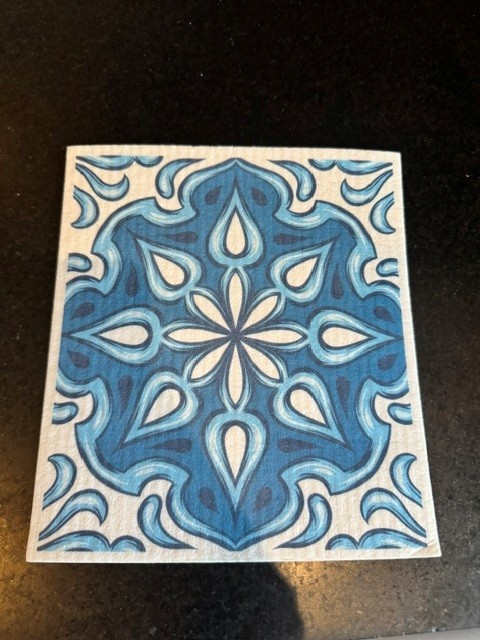
One of the best cleaning tools in my kitchen isn’t a sponge.
It’s a Swedish dishcloth.
If you’ve read what I’ve written about kitchen sponges, that won’t come as much of a surprise. If you haven’t, here’s the short version: sponges are good at cleaning, but they’re also remarkably good at staying damp, trapping food particles, and eventually smelling … like a sponge.
A Swedish dishcloth solves a lot of those problems.
If you’ve never seen one, it looks vaguely like someone flattened a sponge and taught it manners. It’s made from a blend of cellulose and cotton, feels almost paper-like when dry, and becomes soft and absorbent when wet.
The first time I used one, my reaction was immediate.
“Oh. This thing actually works.”
It absorbs far more liquid than its appearance suggests. It wipes counters beautifully, soaks up spills, and handles most of the jobs people reach for a sponge or paper towel to do.
What I like most, though, is what happens after you use it.
A traditional sponge spends much of its life damp. It sits beside the sink collecting moisture and food particles, creating the kind of environment bacteria love.
A Swedish dishcloth dries quickly. When it dries, it becomes stiff until the next time you wet it. The dishcloth stays fresher, feels cleaner, and when it eventually needs attention, you toss it in the washing machine instead of the trash. One cloth can last for months.
It isn’t the right tool for everything. It won’t scrub a baked-on pan, and you’ll need a use or two to get accustomed to how stiff it becomes when dry. But for the everyday wiping that makes up most of what happens at a kitchen sink, it earns its place.
The part I find most interesting isn’t the dishcloth itself.
It’s what it says about how we design cleaning products.
The cleaning aisle often gives us two choices. Buy something disposable that creates waste, or buy something reusable that somehow becomes another thing to maintain.
A Swedish dishcloth isn’t magic, but it comes surprisingly close to escaping that tradeoff. You rinse it, toss it in the wash now and then, let it dry, and keep using it. It doesn’t ask much of you.
The best cleaning tools don’t become another household task. They don’t need special care or constant replacing. They fit into your routine, solve the problem they were designed to solve, and let you get on with your day.
I’d like to see more products designed that way.