“The Problem with Clean as You Go” ended with a question: What cleaning rhythm actually works for your life?
The answer is simpler than most cleaning advice would have you believe.
A cleaning rhythm is not a schedule you impose on your home. It’s the pattern you build by noticing what gets messy fastest, what bothers you most, and when you actually have the capacity to deal with it.
That may sound obvious, but an enormous amount of cleaning advice is built on the opposite assumption. It starts with a system and expects people to adapt themselves around it. If the system says the kitchen should be cleaned every evening, then every evening it is. If the system says Sunday is for resetting the house, then Sunday becomes cleaning day. If the system says you should clean as you go, then every task becomes an opportunity for simultaneous housekeeping.
Sometimes that works. Often, it doesn’t.
Every Cleaning System Has an Imaginary Person Inside It
Every cleaning system quietly assumes a certain kind of life.
Some assume you’ll have energy at the end of the day. Some assume weekends are available for catching up. Some assume interruptions don’t break your concentration. Some assume you’ll notice clutter and immediately want to deal with it. Others assume you’re comfortable letting small messes accumulate until you’re ready to tackle them all at once.
For the people those systems were built for, they can feel almost effortless.
For everyone else, they can feel like cooking in someone else’s kitchen. Everything works. Nothing is where your hands expect it to be.
That’s because homes don’t exist in isolation. They exist inside real lives. The rhythm that works for a retired couple may not work for a household with young children. The rhythm that works for someone who loves routine may not work for someone whose work schedule changes every week. A home occupied by one person develops different needs than a home occupied by five people, two cats, and a dog that appears to manufacture fur from thin air.
The question isn’t whether your cleaning system is objectively good. The question is whether it matches the life being lived inside your home.
Pay Attention to Friction
If you’re trying to find your cleaning rhythm, don’t start by looking at a calendar.
Start by looking for friction.
It’s the same question from “Your Home Might Be Giving You Decision Fatigue” [link], because it’s the most useful question in home care: what in your home asks something from you every time you see it?
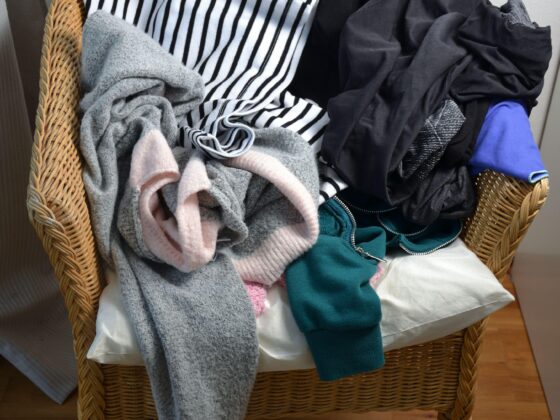
Maybe it’s the dishes. Maybe it’s the entryway where shoes, bags, jackets, and mail gather like migrating birds. Maybe it’s the laundry basket that reaches capacity with startling speed. Maybe it’s pet hair that quietly reappears twenty minutes after vacuuming, as though the vacuum merely negotiated a temporary ceasefire.
Every home has pressure points. Every home has areas that begin creating work, stress, annoyance, or inconvenience faster than others.
Those areas tell you where care matters most.
The goal isn’t to clean everything with equal intensity. The goal is to understand which things have the biggest impact on how your home feels to live in.
Pay Attention to Energy
The second part of the equation is knowing when care naturally happens.
Most people already have rhythms. They just don’t think of them that way.
Some people have energy in the morning. Others become surprisingly productive at nine o’clock at night. Some people prefer small acts of maintenance woven throughout the week. Others would rather spend two focused hours on a Saturday and barely think about cleaning again until the following weekend.
None of these approaches is inherently better.
The mistake is assuming that because someone else’s rhythm works for them, it should work for you.
When people talk about finding a cleaning system, they’re often searching for the perfect plan. In practice, the most durable systems are usually built around existing habits and existing energy. They grow out of life instead of competing with it.
What a Cleaning Rhythm Is Actually For
A lot of cleaning advice treats the home as a project: something to finish, something to win. But there is no finish line, and that’s not a failure. It’s the nature of the thing. A home is closer to a relationship than a project, and the point of any good relationship is a pattern of care that keeps it healthy. Some thrive on small, steady attention. Others rely on longer, focused periods of care. Most fall somewhere in between.
When people describe a home that feels good, they rarely talk about schedules. They talk about how the space supports them. They talk about being able to find what they need. They talk about feeling comfortable. They talk about walking through the front door and feeling their body unclench rather than immediately noticing six new problems demanding attention.
That’s the real purpose of a cleaning rhythm. Not efficiency. Not perfection. Not keeping up with someone else’s system.
A good cleaning rhythm is simply a pattern of care that allows your home to give more than it takes.