There is a particular kind of confidence that comes from squeezing the bottle a little harder.
If one spray is good, six must be better. If a capful cleans the floor, two capfuls should make it twice as clean. We add another squirt of dish soap, another pour of detergent, or another splash of cleaner to the bucket because using more feels like taking the job seriously.
I have done this myself. A little extra cleaner feels like a little extra effort, and extra effort feels responsible. So the bottle gets another squeeze, the bucket gets another pour, and everything seems wonderfully thorough right up until the floor turns sticky, the towels stop absorbing water, and the mirror develops streaks that seem to reproduce while you are looking at them.
The problem is not that the cleaner failed. The problem is that too much of it stayed behind.
Cleaner is supposed to leave
Most cleaning products work by loosening, dissolving, lifting, or surrounding whatever you are trying to remove. Then the dirt and the cleaner have to leave the surface together.
That last part is easy to forget. We tend to think cleaning happens when the product touches the mess. Spray, scrub, done. But if the cleaner remains on the surface, it becomes part of what is now sitting there.
Sometimes you can see the residue as a cloudy film. Sometimes you can feel it under your shoes. Other times it builds gradually until the floor looks dull, the counter feels tacky, or the glass never looks completely clear.
The usual response is to add more cleaner. Now the cleaner is trying to remove yesterday’s cleaner along with today’s dirt.
Residue gives dirt somewhere to land
A clean surface is not one that has been coated with something fresh-smelling. It is one that has had the unwanted material removed.
When too much product is used, the excess stays behind, especially when it isn’t diluted, rinsed, or wiped away properly. That leftover film catches dust, hair, skin oils, crumbs, and whatever else moves through the room.
This is why a freshly mopped floor can look dirty again so quickly. The floor is not producing dirt at an alarming rate. It has simply become much better at holding onto it.
The same thing happens on counters and furniture. Residue creates drag, and drag gives particles something to cling to. What looked polished for ten minutes starts to feel sticky or dull.
More cleaner did not create a cleaner surface. It created a better landing pad.
Floors reveal the problem first
Floors are where overuse becomes hard to ignore because every step tests the work.
Too much floor cleaner leaves a sticky or hazy film, especially when the solution is mixed stronger than the label calls for. Once the residue dries, shoes pick up soil from other rooms and press it into the surface.
Then we mop again, usually with another generous pour of product. The floor gets another layer, and the cycle continues. Eventually, the problem is no longer ordinary dirt. It is dirt embedded in accumulated cleaner.
At that point, the solution is usually less product, not more. The exact method depends on the floor because wood, stone, laminate, vinyl, and tile do not all tolerate the same treatment, but the principle stays the same.
Stronger is not automatically better. Floors are not impressed by enthusiasm.
Laundry has its own version
Laundry detergent is easy to overuse because the amount in the machine feels disconnected from the size of the job. More clothes seem to call for more detergent. Dirtier clothes seem to call for even more.
But detergent also has to rinse away. When there is more detergent than the machine can remove, residue stays in the fabric.
Towels are often the first to complain. They become stiff, smell fine while dry but musty once wet, or stop absorbing water as well as they used to. Adding fabric softener makes the problem worse because softener works by leaving another coating on the fibers.
The towel may smell like a meadow and perform like a raincoat.
Modern washing machines often use less water than older models, which makes proper dosing even more important. The right amount depends on the product, load size, soil level, water hardness, and type of machine. It does not depend on how determined you feel while pouring it.
Bubbles are not a cleanliness meter
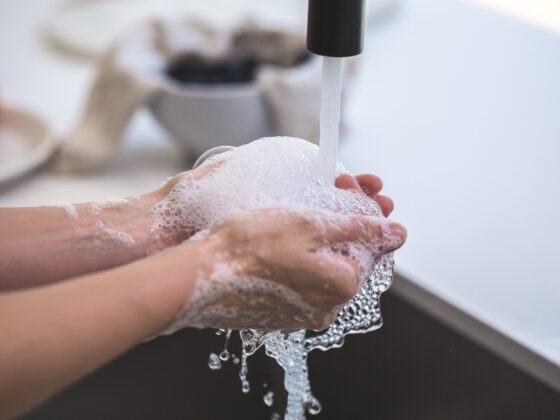
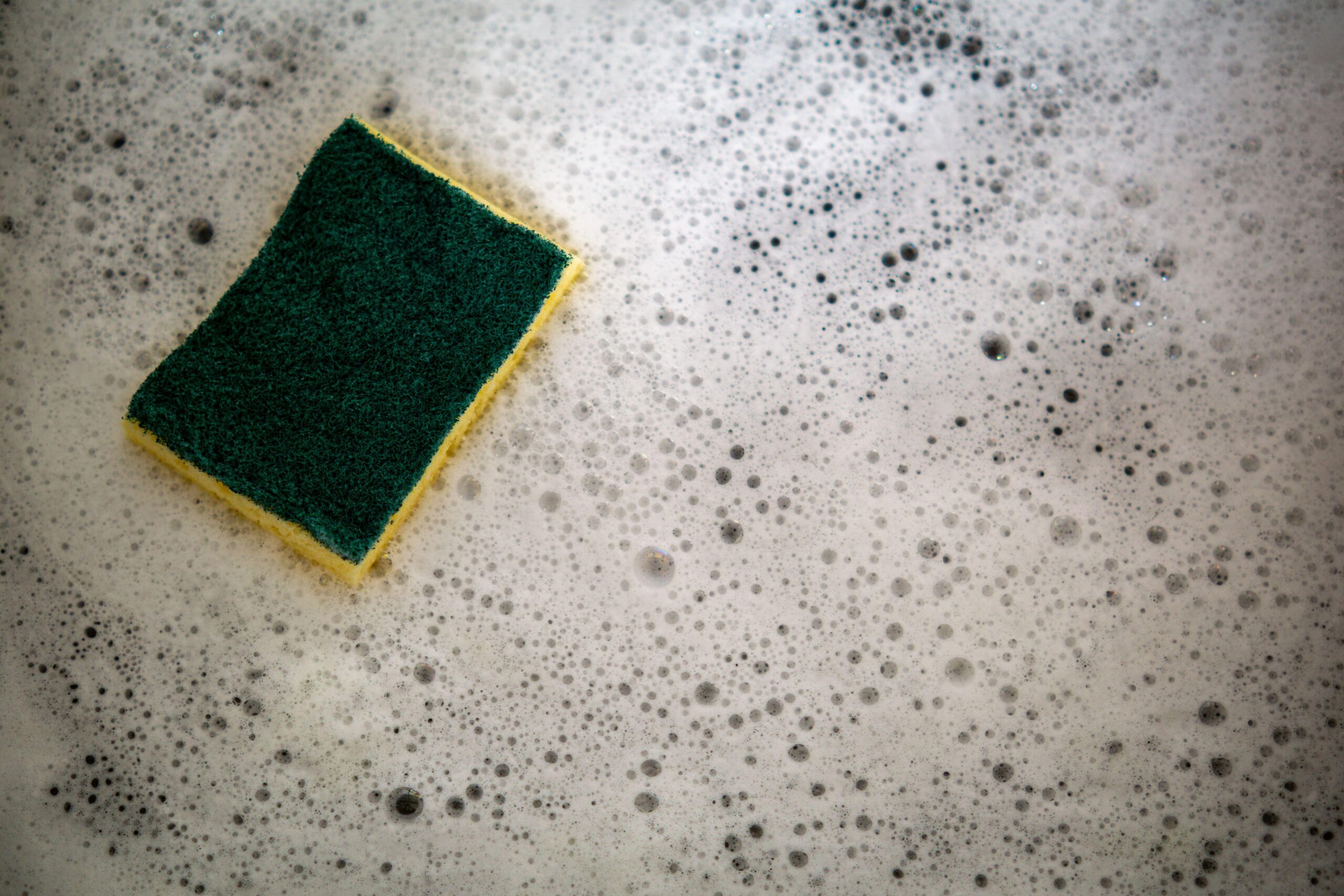
Dish soap is good at cutting through grease, so a sink full of bubbles feels productive. It looks as though something important is happening.
Too much dish soap makes rinsing harder and leaves glassware cloudy or streaked. The same thing happens when a concentrated cleaner is wiped around a counter or stovetop without being fully removed.
At some point, you are no longer wiping away grease. You are rearranging soap.
The same instinct shows up everywhere. We cover a mirror in spray, soak a counter that needed one pass with a damp cloth, or pour cleaner directly onto a surface because a light application does not feel serious enough.
Cleaning does not become more effective because it looks dramatic. Foam is not applause.
Sometimes the cloth is the problem
Not every streaky or sticky surface comes from too much product. Sometimes the cleaner has done its job, but the cloth has nowhere left to put what it picked up.
A cloth that has wiped several greasy surfaces starts spreading grease instead of removing it. A mop pad overdue for rinsing redistributes dirty solution across the floor. A towel coated with detergent or fabric softener can leave lint and residue behind when it is used on glass.
Cleaner loosens the soil. The cloth, mop, or sponge carries it away. Once the tool is full, the dirt starts taking the return trip.
The right amount rarely looks exciting
One reason we overuse cleaner is that the correct amount can feel unimpressive.
A lightly damp cloth does not look as industrious as a counter buried in foam. A measured amount of detergent feels stingy compared with a capful. A bucket without a mountain of suds lacks visual drama.
But cleaning is not theater. The goal is not to create the largest visible reaction. It is to remove the dirt without leaving a new problem behind.
The most effective cleaning often looks almost uneventful: the right product, the right amount, enough time to work, gentle agitation, and a clean cloth or clean water to carry everything away.
The bottle has already done the experimenting. You do not need to continue the research on your kitchen island.
If a surface stays sticky, cloudy, or streaky after cleaning, do not assume it needs another dose. You may not be looking at dirt anymore.
More cleaner does not always mean more clean. Sometimes the dirt left, but the cleaning product moved in.